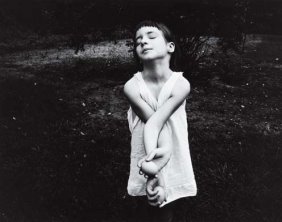
"There are more things in heaven and earth, Horatio, than are dreamt of in your philosophy."
I have found this line on my lips more than once in the last few
months, spoken to a five-year-old who emphatically insists on his
explanation of how things work. I don't know if he grasps what I am
saying because the conversation usually takes a sudden turn to identity
of Horatio and then Hamlet, and then a reminder that his stuffed tiger
is named Horatio.
But the words keep coming to mind.
And I suppose they rise to mind as much for me as for him. My Alexander
Technique instructor lately has used the word plastique in our work, referring to the neuroplasticity of
the brain, its ability to make new pathways in response to changes in behavior
or environment. I don't want to think about neuroplasticity, however. I
just want it to happen in some quiet way. So that one day I notice things have changed and I can say, Ah! My brain is still so malleable, and then, pleased, go about my day. (I can't imagine myself using the word plastique without sounding ridiculous.)
Which
actually happened recently. I was sitting with a friend at lunch and
was describing our plans to move to Portland and realized how smoothly
things were going. Not with the trip itself, per se, but with us. Charles and I
have hardly argued about anything, our ideas about homes and schools and
jobs and neighborhoods not so much aligning as forming a conversation
in which we know and accept our parts. Yes, I did wake up in the middle
of the night worried we hadn't applied to enough schools—and feverishly
applied to two more the next morning. And yes, Charles did think I was worrying too much, yet mostly
kept a respectful distance. And yes, I did get snappish about some of
the neighborhoods where Charles wanted to investigate homes. And I all
but stopped listening to the discussions of mortgages, insurance, and
property taxes—but not before grasping the outlines of the situation. I
cannot be expected to understand all the financial maneuvers, but I have learned that I must continue to ask questions
until I can translate the finance-speak into something I understand. Which is to say on the whole things have gone well. Which is to say I have changed—new paths can be learned. Nobody is claiming that it was easy or anything.
So what I'm telling myself is: yes. Old dogs, new tricks. On to the next challenge: my health. I hope to be more systematic and optimistic this time through. I bought a neon, hard-bound, pocket-sized journal with three words on the cover: find your happy. I know, sappy. But it will come in useful as I attempt to make some more changes.
Showing posts with label Alexander Technique. Show all posts
Monday, March 17, 2014
Saturday, June 17, 2006
the means whereby: more on the alexander technique
"We must stop even thinking of standing up straight. To think of it commits us to the operation of an established habit of standing wrong. Instead we find an act within our power which is disconnected from any thought of standing. In performing this other act we inhibit our habit of falling into the customary bad posture (inhibition) and, at the same time, begin a series of acts which may lead to the correct posture (direction).
Until we take such intermediate acts seriously enough to treat them as ends, we waste our time in any effort to change our habits. Of the intermediate acts, the most important is the next one."
-- John Dewey, Human Nature and Conduct
Wednesday, June 14, 2006
directions

"Let your neck be free. Let your head forward and up. Let your back lengthen and widen. Although Alexander's directions may begin as a verbal formulation, eventually they become part of one's attitude toward life. Our direction becomes a matter of merely thinking up."
--Michael Gelb, Body Learning: An
Introduction to the Alexander Technique
I've spent the better part of my life in my head: reading, drawing, dreaming, designing--a scope sadly limited to slumping activities. Only photography asks movement of me, the arrangement of tangible objects beyond the reach of my computer or sketch book.
Enter the Alexander Technique.
I've been studying the AT over a year now. In lessons I'm asked to think in terms of my skeleton: sacrum, spine, skull. (Puzzled by what the sacrum might be, I googled it--see here--although I'm still not sure what it feels like inside me).
Only recently has this learning become a bit embodied. I'm awed by how simple it is to feel, how close at hand this beauty waits, and yet how distant and cumbersome the physical world often remains. I take joy in that which, however rarely, receives my attention: the feeling of heel bone against the rubber sole of my shoe and, through it, the concrete sidewalk pushing up at me; the wooden slats of my kitchen chair against which my ribcage rests; the wondrous revelation that I own two sit bones that do naturally help when sitting.
I wonder at all the space offered me, and how many ways there are to move through it. I am a three-dimensional thing that walks, thinks, prays--a balance of muscle and bone moved by electric impulses from the brain.
I give myself simple directions: Let my neck be free. Let my head forward and up. Let my back lengthen and widen.
Monday, April 10, 2006
the spine and the inner life

Spring is here. My sense of inner well-being has not passed. The sun shines. The birds sing "cheese-burrr-gur" —unwittingly reminding me of Tyson—and the magnolia trees are in full bloom.
Parsnip and spinach soup for lunch with horseradish hummus on wheat bread. I observe Lent in little ways.
I think about my spine. Up. My neck. Free. The first movements are inner, of my thinking, the outer movements follow: a sense of space between my shoulder blades, my spine inches up. I notice, sitting at my desk at work, that I pivot forward as if to reach the keyboard with my collar bone, my legs grip the floor for balance. I'm not sure yet how to solve this. I notice nonetheless.
I am reading Jung's Memories, Dreams, Reflections. In the prologue he writes:
All memories of travels, people, and surroundings pale beside interior happenings... Recollection of the outward events of my life have largely faded or disappeared. But my encounters with the "other" reality, my bouts with the unconscious, are indelibly engraved upon my memory...
Similarly, certain people are established inalienably in my memory as if their names were entered on the scrolls of my destiny from the beginning, so that encountering them was at the same time a kind of recollection...
Therefore my life has been singularly poor in outward happenings... I can understand myself only in light of inner happenings.
Subscribe to:
Posts (Atom)