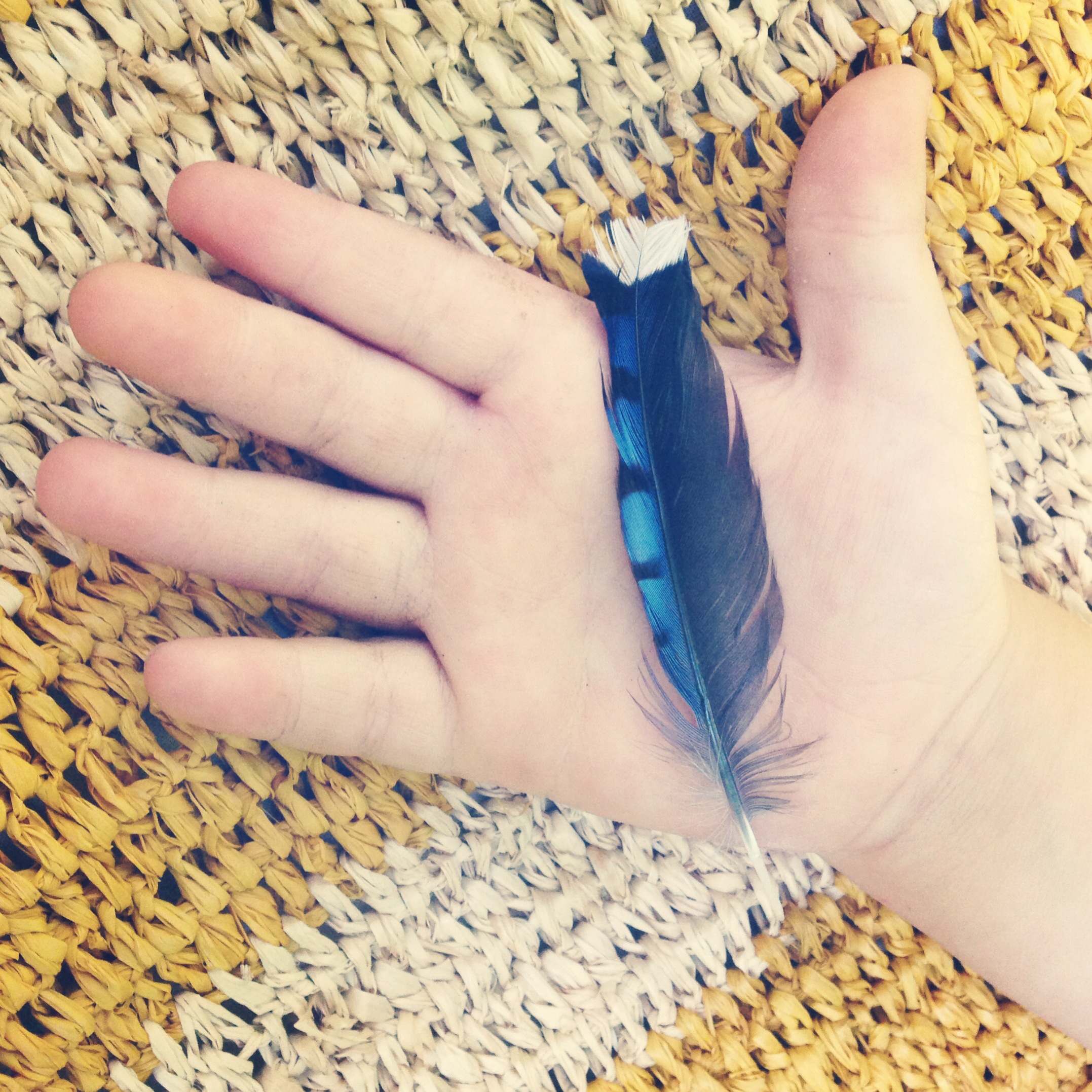
Overlooking Oaks Bottom in on the first day of March 2017, © Amber Schley Iragui |
Showing posts with label poetry wednesday. Show all posts
Thursday, March 02, 2017
Wednesday, August 03, 2016
of kindness, and cabbages, and the death of my father
Today marks one week since my father died.
It's not easy to write about my father. At least, it is not easy to write about my father in the manner people expect you to write about a father after he has passed. We did not have an easy relationship. He wasn't really such a good father.
The morning after my father died I walked seven miles before lunch. I crossed the railroad tracks to the spacious tree-lined neighborhood just east of my home, where the houses seem to preside rather than populate the streets. I usually walk in my own well-ordered neighborhood: small Craftsman homes, rope swings dangling over sidewalks, roadside vegetable gardens, beehives, bikes heaped on porches. But that morning I wanted to wander without knowing exactly where I was, so I crossed over tracks and past the golf course. The roads, no longer gridded, meandered as if they'd lost all track of time. The houses, too, were dreamlike—facades like elegant faces with half-lidded eyes, enormous shrubs like well-coiffed hair. The only people visible were landscapers armed with blowers and wackers.
I walked. Sometimes I cried. I didn't greet anyone because there was no one to greet.
When I was a child many people told me I was like my father. As I grew up this seemed to me more a burden than a boon. My father was not a happy man, and his bleak outlook on life seemed to drain joy and spontaneity from any endeavor. I did my best to not be like him, and yet many of my personality traits flowed directly from him anyway. The list of interests we shared is endless: photography, rock collecting, birding, weaving, botany, theology, paper-making, recycling, to name a few. Even making soup—the one kind of cooking I do without consulting a recipe, and by far my only polished skill in the kitchen—was one of his best as well.
Today my best friend sent me a poem. I texted her, this is the best poem ever! She replied it was written for you! But it could as well been written for my father.
T H E A R T O F D I S A P P E A R I N G
by Naomi Shihab Nye
When they say Don't I know you?
say no.
When they invite you to the party
remember what parties are like
before answering.
Someone telling you in a loud voice
they once wrote a poem.
Greasy sausage balls on a paper plate.
Then reply.
If they say We should get together
say why?
It's not that you don't love them anymore.
You're trying to remember something
too important to forget.
Trees. The monastery bell at twilight.
Tell them you have a new project.
It will never be finished.
When someone recognizes you in a grocery store
nod briefly and become a cabbage.
When someone you haven't seen in ten years
appears at the door,
don't start singing him all your new songs.
You will never catch up.
Walk around feeling like a leaf.
Know you could tumble any second.
Then decide what to do with your time.
* * * * *
I am that grocery store cabbage, ducking down the aisle to avoid neighbors. And it's safe to say that my Dad was that cabbage too. He didn't go to parties. He didn't like restaurants where the tables were close together. He was a quiet, private person; more comfortable alone than in a room of people. I am the same way: I endure parties, taking long breaks to walk outside. I have spent many a party reading in the car (I rarely feel this is a poor choice).
A few weeks ago, when my father was still able to carry on a conversation, he said something along the line of It's not easy, but that's just how it is. Life is hard. And I cringed. As a child, it was oppressive for me to hear this message over and over. Life is unfair. Life is hard. People are ungodly. People will disappoint you. I countered my Dad that day, even though I'd sort of given up on countering him at this point. My life hasn't been all that hard, I said. And it is true, all the doom and gloom I'd expected after my childhood never panned out. In fact, the opposite happened. There was so much light and beauty everywhere, people wanting me to do well. Helping me. Light pouring in every window, slipping through every chink in the wall. Some people were bad eggs, yes, and bad things happened: disappointments, heartbreaks, mistakes. But overall, the good seemed so much more substantial; the beauty so much more compelling. And somewhere along the line I found that the darkness bending around the corner was more a challenge to be met than a condition to endure.
In the last days of my Dad's life we read to him from the Chronicles of Narnia. He'd read those books to us so many times as children, and we knew he loved them. It seemed fitting to read them back to him now. And yet I puzzle over my Dad's love C. S. Lewis' imaginary Narnia—where no matter how bad things seemed there was a griddle on the stove with bacon cooking and buttered bread, where light and solemnity and joy were abundant—with his own darkly suspicious outlook. It seems to me that Lewis' fantasy world was not made up of inaccessible things: friendship, food, valor, beauty, kindness, and honor are available to almost anyone. (Well, of course I'd also like a crimson cloak, a healing cordial, and a friendship with a courtly talking mouse).
Which brings me to this: while I inherited many traits from my father, depression was not one of them. Once I was able to reject the murky worldview of my childhood, things got a whole lot better. Although I may want to hide from people in grocery stores, it's not because they are—or I am— rotten or evil. It's because I'm an introvert and find small talk exhausting. So many of the things my father seemed unable to appreciate and value in himself, I find also in myself. And yet, here's the rub: they are a source of joy and pride to me. Solace, enjoyment, meaning, hope, mastery, connection, and even professional fulfillment spring from these same traits and interests I share with my father. I protect these things in myself, finding ways to be that let them shine most fully.
That day after my Dad died, while I wandered along sloping lawns and under old maples, I opened the On Being podcast on my phone. A new podcast popped up, a conversation with the poet Naomi Shihab Nye. Nye is one of my favorite poets, and has been posted on my blog many times before. But that day she talked about a poem of hers with which I wasn't familiar: Kindness. As I walked and held the loss of my father—a loss more keen for the sad brokenness of what wasn't—her words on loss, on sorrow, and on kindness walked with me. Her voice creating a path through the sadness, like light streaming through the leaves overhead, and kindness walking beside me.
K I N D N E S S
by Naomi Shihab Nye
Before you know what kindness really is
you must lose things,
feel the future dissolve in a moment
like salt in a weakened broth.
What you held in your hand,
what you counted and carefully saved,
all this must go so you know
how desolate the landscape can be
between the regions of kindness.
How you ride and ride
thinking the bus will never stop,
the passengers eating maize and chicken
will stare out the window forever.
Before you learn the tender gravity of kindness
you must travel where the Indian in a white poncho
lies dead by the side of the road.
You must see how this could be you,
how he too was someone
who journeyed through the night with plans
and the simple breath that kept him alive.
Before you know kindness as the deepest thing inside,
you must know sorrow as the other deepest thing.
You must wake up with sorrow.
You must speak to it till your voice
catches the thread of all sorrows
and you see the size of the cloth.
Then it is only kindness that makes sense anymore,
only kindness that ties your shoes
and sends you out into the day to gaze at bread,
only kindness that raises its head
from the crowd of the world to say
It is I you have been looking for,
and then goes with you everywhere
like a shadow or a friend.
A few weeks ago, when my father was still able to carry on a conversation, he said something along the line of It's not easy, but that's just how it is. Life is hard. And I cringed. As a child, it was oppressive for me to hear this message over and over. Life is unfair. Life is hard. People are ungodly. People will disappoint you. I countered my Dad that day, even though I'd sort of given up on countering him at this point. My life hasn't been all that hard, I said. And it is true, all the doom and gloom I'd expected after my childhood never panned out. In fact, the opposite happened. There was so much light and beauty everywhere, people wanting me to do well. Helping me. Light pouring in every window, slipping through every chink in the wall. Some people were bad eggs, yes, and bad things happened: disappointments, heartbreaks, mistakes. But overall, the good seemed so much more substantial; the beauty so much more compelling. And somewhere along the line I found that the darkness bending around the corner was more a challenge to be met than a condition to endure.
In the last days of my Dad's life we read to him from the Chronicles of Narnia. He'd read those books to us so many times as children, and we knew he loved them. It seemed fitting to read them back to him now. And yet I puzzle over my Dad's love C. S. Lewis' imaginary Narnia—where no matter how bad things seemed there was a griddle on the stove with bacon cooking and buttered bread, where light and solemnity and joy were abundant—with his own darkly suspicious outlook. It seems to me that Lewis' fantasy world was not made up of inaccessible things: friendship, food, valor, beauty, kindness, and honor are available to almost anyone. (Well, of course I'd also like a crimson cloak, a healing cordial, and a friendship with a courtly talking mouse).
Which brings me to this: while I inherited many traits from my father, depression was not one of them. Once I was able to reject the murky worldview of my childhood, things got a whole lot better. Although I may want to hide from people in grocery stores, it's not because they are—or I am— rotten or evil. It's because I'm an introvert and find small talk exhausting. So many of the things my father seemed unable to appreciate and value in himself, I find also in myself. And yet, here's the rub: they are a source of joy and pride to me. Solace, enjoyment, meaning, hope, mastery, connection, and even professional fulfillment spring from these same traits and interests I share with my father. I protect these things in myself, finding ways to be that let them shine most fully.
That day after my Dad died, while I wandered along sloping lawns and under old maples, I opened the On Being podcast on my phone. A new podcast popped up, a conversation with the poet Naomi Shihab Nye. Nye is one of my favorite poets, and has been posted on my blog many times before. But that day she talked about a poem of hers with which I wasn't familiar: Kindness. As I walked and held the loss of my father—a loss more keen for the sad brokenness of what wasn't—her words on loss, on sorrow, and on kindness walked with me. Her voice creating a path through the sadness, like light streaming through the leaves overhead, and kindness walking beside me.
K I N D N E S S
by Naomi Shihab Nye
Before you know what kindness really is
you must lose things,
feel the future dissolve in a moment
like salt in a weakened broth.
What you held in your hand,
what you counted and carefully saved,
all this must go so you know
how desolate the landscape can be
between the regions of kindness.
How you ride and ride
thinking the bus will never stop,
the passengers eating maize and chicken
will stare out the window forever.
Before you learn the tender gravity of kindness
you must travel where the Indian in a white poncho
lies dead by the side of the road.
You must see how this could be you,
how he too was someone
who journeyed through the night with plans
and the simple breath that kept him alive.
Before you know kindness as the deepest thing inside,
you must know sorrow as the other deepest thing.
You must wake up with sorrow.
You must speak to it till your voice
catches the thread of all sorrows
and you see the size of the cloth.
Then it is only kindness that makes sense anymore,
only kindness that ties your shoes
and sends you out into the day to gaze at bread,
only kindness that raises its head
from the crowd of the world to say
It is I you have been looking for,
and then goes with you everywhere
like a shadow or a friend.
Wednesday, January 13, 2016
So little is a stone
![]() |
| Amber Schley Iragui © 2015 |
B U R N I N G T H E O L D Y E A R
Naomi Shihab Nye
Letters swallow themselves in seconds.
Notes friends tied to the doorknob,
transparent scarlet paper,
sizzle like moth wings,
marry the air.
So much of any year is flammable,
lists of vegetables, partial poems.
Orange swirling flame of days,
so little is a stone.
Where there was something and suddenly isn’t,
an absence shouts, celebrates, leaves a space.
I begin again with the smallest numbers.
Quick dance, shuffle of losses and leaves,
only the things I didn’t do
crackle after the blazing dies.
* * * * *
It has been raining and raining and I'm having a hard time adjusting. I know that's what it does here: rain. I was born here; I lived here till I was twenty-five. But after fifteen years in New York—with the sun, and snow, and occasional thunderstorms—it's hard not to feel it is just too wet, too deeply damp, outside right now. I lay in bed and think about hibernation, of crawling into a warm little cave and sleeping until spring. A cave with a fireplace, and clearly a mantle, and a deep soft chair, and some books—and then we're basically dreaming about hibernating in my own house. My house but a little farther away from everything; away from the passing cars and the bouncing children.
But I like the sound of the rain, I admit. I like the sound on the roof of my office, now, as I write this.
I didn't watch the State of the Union address this evening. I only know that this event took place because, while the kids were falling asleep, I checked Facebook and there were all sorts of postings about it. And it occurs to me that I doubt I've ever heard a State of the Union address. Not one I can remember, at least. And similarly, when David Bowie died a few days ago—alerted again by multitudinous Facebook postings—I could not bring his voice to mind, or any song of his I knew. Disturbingly, his face is mostly familiar to me because a friend of mine owns a David Bowie doll that she dresses up posts photos of on Instagram. And so it seems to me that as far as popular culture and politics go, I'm pretty much hibernating all the time.
Which is not to say that I don't pay attention to things. I do, but just to a select few things. And to those things I pay close attention. For example: dreams, typography, the birds I see in the neighborhood. I pay attention to my children, not always what they say as much as how they seem to be doing. I pay attention to the plants in my kitchen window, and to book covers, and New Yorker cartoons; I take note of new authors and wait for their names to appear and reappear before I buy their books. I have been paying attention to what's been happening in Syria and Iraq, and watching the refugees streaming into Turkey and Eastern Europe and worrying for them. But I can't, you know, take it all in. There is far too much to pay attention to and I live in this small stucco house with lots of windows, under skies heavy with rain, and have small growing things to tend.
{ Julia's poetry wednesday post }
Wednesday, April 23, 2014
the hidden place that heals
Over and over by us torn in two,
the god is the hidden place that heals again.
We are sharp-edged, because we want to know,
but he is always scattered and serene.
—Rainer Maria Rilke
from The Sonnets to Orpheus, XVI
Translated from the German by Stephen Mitchell
• • • • • • • • • • • • • • • • • • • • • • • • • • • • • • • • • • • • • • • • • • • • • • •
It is Bright Wednesday, or at least the dying nub of Bright Wednesday, and I am finally sitting down to write. All day a cool, steady wind passed through the trees out my window. Each time I looked the sky and river changed color as if trying on different outfits: clouds once low and thin above choppy gray water, another moment green and heavy over gold glitter.
It was a productive day, both children (finally) back in school after a lingering spring break. And I finally began preparing for Genevieve's eye surgery for esotropia next week. By prepare I primarily mean prepare myself—I have already spent plenty of time preparing Genevieve. My habit is to focus on getting through all the unpleasantness and anxieties by clenching in and checking out during the difficult moments. I want to be done with it all and take off her bandages and have her eyes see straight. I want the healing well underway. Just like I want to be done with packing and saying goodbyes and sorting the keeps from the throw-aways. I want to plug through without engaging the uncertainties; pit-pat, all squared away. But I'm learning is that while this method might have worked well for me at one point in my life, and may still function OK at times, it certainly isn't helpful for my three-year-old. (And, surprise, surprise, it isn't great help to me either.)
Fear of engaging the present moment in favor of waiting for a more serene future moment is in essence living in fear. This literally means that my back is tense, my neck and shoulders clench, and my derriere is tucked in. I am trying to keep it all together by walking around stiff as a board. And what's more: no one can keep it all together anyway. Not even God. Isn't that what we learn during Holy Week? Today the Redeemer of the world is slapped on the face. Those lines from Holy Friday always catch in my heart. I have to ask myself, was Jesus walking around stiff as a board for thirty years, dreading his crucifixion? Wanting to get this being human thing over and done with? As I recall, he only allowed himself one night of that.
Over and over by us torn in two / the god is the hidden place that heals again. To be broken and feel my brokenness, to sit with uncertainty and accept it—this is part of the goal. But more importantly I am trying shift my focus away from the things I am dreading. To instead regard the whole situation with curiosity and gentleness. To remember that we are having this surgery now because we have an awesome doctor here, a surgeon who is an expert in this procedure. I can't be sure nothing will go wrong, but that small fear is only a small part of a much larger picture. The vast majority of things in my life, and in Geneveive's life, are going incredibly well. I know that hidden place that heals again, I've been there before. Now I just have to trust and live, breathe, through it. To be there—awake—for both of us.
{ p o e t r y w e d n e s d a y }
Tuesday, April 15, 2014
this loss speaks no disaster
![]() |
| photo by Mark Guy |
by Elizabeth Bishop
The art of losing isn’t hard to master;
so many things seem filled with the intent
to be lost that their loss is no disaster.
Lose something every day. Accept the fluster
of lost door keys, the hour badly spent.
The art of losing isn’t hard to master.
Then practice losing farther, losing faster:
places, and names, and where it was you meant
to travel. None of these will bring disaster.
I lost my mother’s watch. And look! my last, or
next-to-last, of three loved houses went.
The art of losing isn’t hard to master.
I lost two cities, lovely ones. And, vaster,
some realms I owned, two rivers, a continent.
I miss them, but it wasn’t a disaster.
—Even losing you (the joking voice, a gesture
I love) I shan’t have lied. It’s evident
the art of losing’s not too hard to master
though it may look like (Write it!) like disaster.
• • • • • • • • • • • • • • • • • • • • • • • • • • • • • •
Maybe the best indicator of maturity is the ability to lose. To walk away, to give up: demands, cities, dreams, rivers, people. I first felt the sting of real loss in my late twenties, a true friend gone—or, more precisely, divorced. It was both disorienting and freeing. I remember clearly the huge weight of it sliding off of me, and there in that open space the pain of missing someone I knew well. After that I could imagine losing other things with more ease. Trying on loss like a hat: this one or that?
But perhaps maturity is the ability to know what is worth keeping. Loss may feel less disastrous over time, but acknowledging the things which cannot be lost may be central to maintaining identity. Nearly three years ago I walked back and forth along a wooded stretch on our street, talking on the phone and crying. Not understanding why I was crying, but knowing that my best friend was in some inexplicable danger and that I could not follow her where she was going. I was surprised that I felt the pain so keenly: my body welled with anger, fear and loss. But I also felt confident we could ride it out; that our friendship would prove resilient, that she was resilient. And I was right.
We are six weeks from our move to Portland, but in significant ways the loss of New York has already happened. Our dear friends moved away a week and a half ago, a grief for us all but particularly the children. I watch as my son processes the absence of his best friend. I remind myself to be patient through the breakdowns and fits of anger, this is his first time losing something important to him. He is also getting ready to lose the city he was born in, his beloved nanny, and all his friends. I, however, am ready to go; this loss speaks no disaster to me. I can imagine our life in Portland down to the smells and the color of the light. The Hudson River may be sublime, but now I see her as a stand-in for the Columbia. The tangley woods of New England, however quaint and storied, lack the deep, wet stillness of a Douglas Fir forest.
Leaving New York is not really a loss, but just the turning of a page. I grew into an adult in this state—I learned how to party, to grieve, to be independent, assertive and beautiful here; I learned how to negotiate, to shovel snow, to parent, and to parallel park here. There is not much chance I will really lose New York when we leave. I will miss her and I will not miss her. There is joy and there is sorrow, they mingle together—it is no disaster.
Wednesday, November 13, 2013
everything changes
E N D O F A U T U M N
I have seen for some time now
the change in everything.
Something arises and acts
and kills and brings suffering.
In the gardens now from day to day
is a change from green
to yellow and gray,
a slow dying-away:
how long my road has been.
Now I stand in this emptiness
and look down on the rows of trees.
Almost to the distant sea
the foreboding earnestness
of the sky lies heavily.
–Rainer Maria Rilke
Translated from the German by C. F. MacIntyre
• • • • • • • • • • • • • • • • • • • • • • • • • • • • • •
It has been Poetry Wednesday all day, but I have been off-balance all week. The thin slice in pie-chart of my brain where Poetry Wednesday resides has been taken up with other mysteries—mostly social & business in nature—but not excluding a reoccurring dream in which I am given a new (and lovely) item of clothing only to find it is not finished, its collar is held on with straight pins or the hems left raw and unevenly cut. I believe I've had this same dream three nights in a row now, and a few times last week too.
It is cold, finally. A heavy blanket of fat gold maple and fluted ginko leaves covers the sidewalks in the morning, as if they fell overnight in a rush to protect the ground from coming snow. Gloves and hats, now necessary, are jammed in pockets and backpacks as the walks to school in cold weather commence. My son's kindergarten teacher left for Finland at the beginning of the month, where she plans to marry and then live. I liked her, but her sudden leaving hasn't gone down that well with my son. Or anyone, for that matter. Tomorrow there are parent-teacher conferences without a teacher; things limp by in their in-between way. I don't like in-betweens any better than my son. He came home today complaining that his stomach aches because school is too loud; before bed he told me he is worried about how everyone is going to stay on our planet when it's round.
Everything changes. And life is full of the in-between places, hobbling off-balance until you get two shoes back on. Genevieve needs two simple surgeries. Ike needs a new teacher. I am good, though, because I finally got our internet working properly and some of my more pressing technology issues sorted out.
And I'm going to bed now where I'll dream about a rust velveteen cloak with a hood basted on, or a lovely navy double-crepe dress with side seams unsewn.
Tuesday, October 29, 2013
moving beyond no
T H E P A I N
Like the human brain, which organizes
The swirls and shades of the bathroom tiles
Into faces, faces
With expressions
Of exhaustion, of disdain. The
Virgin Mary in the toast of course
But also the penance in the pain, and the way
My mother invented
Plums and tissue paper, while
My father invented the type of
Sudden kindness
That takes you by surprise
When you’ve expected to be chastised
And makes you cry
—Laura Kasischke
• • • • • • • • • • • • • • • • • • • • • • • • • • • • • • • • • • • •
A few weeks ago our WB teacher circulated an article among us entitled The Gift of No, mentioning that many parents struggle with saying "no" to their children. I smiled; I really do not have this problem with my kids. In fact, I may be too good with no in general; it's become an attitude on which I am all too apt to rely.
"No" is a powerful little word. I remember years ago, after my divorce, I tried using it silently with waiters or other strangers. The dating scene in NYC was bewildering, and after a few broken hearts, I felt the need to practice my blanket refusals. The first time I tried this was at a café on the Lower East Side—some hip, well-lit establishment done out in wood and concrete—with a sleepy-eyed waiter wearing a stocking cap and a five- o'clock-shadow. When he came to take the order I regarded at him as if he'd just asked for my phone number. Silently I said "No, no way. I don't think it will work out," then ordered a scone and a latte. I was thrilled by how easy this was. And, like exercising, it got easier and easier. By the time I met my now-husband, I had gotten fairly good at it. I remember one evening in particular, during Lent, when some hungry parishioners—including Charles—were lingering around after church, chatting and making furtive attempts at planning dinner out. I was intrigued by this tall, opinionated man, but I knew better than to waste my time trying to get to know him. I turned to a girlfriend next to me and said, "Let's get going. Do you want to grab a bite to eat?" We made quick work of a general good-bye and headed out into the passages to the street. A few moments later I heard heavy footsteps coming down the passage. It was Charles, running after us, asking if he could join us for dinner.
But I had so much more no to learn. It was only after marrying Charles and moving into Manhattan that I came to understand that I had coasted by in life with as little conflict as possible. Neither my work or my personal relations had asked too many difficult no's of me. And by difficult, I mean the kind of no's that are followed by negotiations; where you stay in a difficult moment and ask for what you want, where you find out what the other person wants. Where, when faced with conflict, you don't turn tail and lay on the bed crying. So, unpleasant as it was, I learned yet more kinds of no.
Then there were children. Saying "no" to children is not so difficult to learn. They are small, impressionable, and and can be forced to do things. In fact, a few strong no's seemed to put them at their ease. At the same time I was raising children, I was learning about social negotiations. How to keep my boundaries and my integrity while engaging my neighbors and community. This is not something I've by any means mastered, it is one of the most difficult parts of my life. And I think, perhaps, I've learned to rely too much on no, quickly distancing myself from people or activities I find difficult, draining, or untrustworthy. Walking my son to school the other day, I found myself coaching myself in this direction—to be honest, courageous, direct. I caught myself. You don't need to be more honest, Amber, you've got that down. You need to be more kind.
There it is: I do need to be more kind, and gentle, and open-hearted. Being more comfortable with my boundaries, I can risk being kind. Because, ultimately, kindness transforms. Being strong and brave and honest—saying no—can only take me so far. Invulnerability is not my goal. It is vulnerability that invites grace, and it is grace that "takes you by surprise / When you’ve expected to be chastised / And makes you cry."
{ p o e t r y w e d n e s d a y }
Wednesday, October 16, 2013
dogs
![]() |
| photograph by Jenny Schroedel |
H O W I T I S W I T H T H E M
We become religious,
then we turn from it,
then we are in need and maybe we turn back.
We turn to making money,
then we turn to the moral life,
then we think about money again.
We meet wonderful people, but lose them
in our busyness.
We're, as the saying goes, all over the place.
Steadfastness, it seems,
is more about dogs than about us.
One of the reasons we love them so much.
—Mary Oliver from Dog Songs, 2013
• • • • • • • • • • • • • • • • • •
There is a poodle in our building, whose name I cannot remember. Riding the elevator one day with the poodle's owner, a warm but reserved woman, I asked her name. "My name?" she asked, "or the dog's name?" I smiled, "no, your name." That is to say, I am no dog person. Even now I remember my neighbor's name, but not the poodle's name. I do not dislike dogs, or cats, or animals in general—but I do not think about them much, excluding birds. (I think about birds regularly, sometimes obsessively, stalking around to find the source of some unfamiliar trilling. Or, for example, I know when the hawks are circling my building before I hear or see them, because I know the jays' or crows' angry warnings when the hawks are cruising by).
But my best friend is a dog person, she took the photo above of her dog and chicken on the stoop of her Hawaii home. She always has a dog or two at hand. This weekend, with C at our favorite bookstore in New Paltz, I came across a new book of Mary Oliver's poems, Dog Songs. I wouldn't have picked up a book with that title if I didn't already like the author, but as I do I picked it up. It's marvelous. It makes me want to be a dog person. But I can't keep it, it is too good a present for my dear friend, so it will fly off to Hawaii tomorrow. But before it goes I will share another of its poems here.
• • • • • • • • • • • • • • • • • •
B E N J A M I N, W H O C A M E F R O M
W H O K N O W S W H E R E
What shall I do?
When I pick up the broom
he leaves the room.
When I fuss with kindling
he runs for the yard.
Then he's back, and we
hug for a long time.
In his low-to-the-ground chest
I can hear his heart slowing down.
Then I rub his shoulders and
kiss his feet
and fondle his long hound ears.
Benny, I say,
don't worry. I also know the way
the old life haunts the new.
—Mary Oliver from Dog Songs, 2013
{ p o e t r y w e d n e s d a y }
Wednesday, October 02, 2013
a return to poetry wednesday:
burdens unwieldy and those less so
T R U S T
by Liz Waldner
If I could be walking down the road
you told me to imagine and I would and find
a diner kind of teacup sitting on its saucer
in the middle then I would feel so good
in my life that is just like mine
and I would walk right up and look into my face
eclipsing the sky in the tea in the cup
and say, "Thank you, I have enjoyed
imagining all this."
• • • • • • • • • • • • • • • • • • • • • • • • • • • • • • • • • • • • • • • • • •
I am in the middle of one of the busiest weeks of my life, or at least it feels that way. But I won't bore you with the details because who really cares, not even me. Except that in the middle of the day yesterday, walking from a meeting at my son's school to an appointment, my eyes welled with tears. That morning in the Parent Room the diminutive grandmother of a student in my son's class spoke briefly about her life. It was all sorrow. She spoke quietly and with a heavy accent, but I got it; I had no words but only my hands to grip her fingers. The face of her granddaughter rose in my mind—her large sad eyes next to my son's brave face on the first day of school.
When I got home I sat for twenty minutes, knitting furiously. I got up and went to fetch my daughter and attend yet another meeting. A few hours later I took Genevieve to a dentist appointment because a mysterious tooth has appeared behind her baby front teeth—one of which is already strange enough, being germinated. Genevieve's appointment and accompanying x-rays only confirmed my fears. She was referred to a pediatric oral surgeon who I was assured would be more familiar with these kinds of dental abnormalities. I came home and knit furiously, thankful for Anely who had already made the children's dinner.
Today was still busier than yesterday; I had no time for knitting. I felt tears well again, but not in sympathy for anyone but myself and the frantic mess of my apartment and schedule. But also because my baby's teeth are seriously messed up, and although it shouldn't be a big deal—she's not ill—a burst of anger and sadness accompanied me throughout the day. I recognize, all the same, the providence of that conversation with the grandmother in the Parent Room, framing the space around Genevieve's teeth as though to remind me of what is a tragedy and what isn't. Because teeth can be fixed, but there are many things that are permanently broken. There are far more unwieldy burdens to carry.
{ p o e t r y w e d n e s d a y }
Monday, September 23, 2013
something shimmers, something is hushed up
by John Ashbery
The room I entered was a dream of this room.
Surely all those feet on the sofa were mine.
The oval portrait
of a dog was me at an early age.
Something shimmers, something is hushed up.
We had macaroni for lunch every day
except Sunday, when a small quail was induced
to be served to us. Why do I tell you these things?
You are not even here.
John Ashbery, “This Room” from Notes from the Air: Selected Later Poems. Copyright © 2007 by John Ashbery
• • • • • • • • • • • • • • •
I have a half an hour of quiet left: I squandered my other two and a half hours of quiet by laying on my bed thinking about a bird call I cannot identify—and then in a flurry of guilt—by placing an order online for a bunch of household items in need of replacement. I also worried about my kindergartener who reportedly fell hard on the way to school—both hands deep in his pockets, no doubt fingering some crusty piece of Manhattan schist. Maybe too I wiped the breakfast crumbs from the table, reheated my coffee; I surely browsed amber necklaces on Etsy for twenty minutes.
In a few minutes I will make my way a few blocks north, toward the park, and into the cloistered stone walls that surround the Catholic school where my daughter goes to preschool. I will stand a little away from it all, the mothers and teachers and nannies, feeling both pride and dread by small degrees. But mostly responsibility: the vague anxiety of being a mother heightened by the vigilance of a small business owner. Always ready for things to go awry.
But for a moment I have this quiet. And a poem by Ashbery that reminds me of a less earnest Rilke. Something shimmers, something is hushed up.
Thursday, August 29, 2013
quickly things grow, wilt, go
by Marie Ponsot
A new embroidery of flowers, canary color,
dots the grass already dotty
with aster-white and clover.
I warn, “They won’t last, out of water.”
The children pick some anyway.
In or out of water
children don’t last either.
I watch them as they pick.
Still free of what’s next
and what was yesterday
they pick today.
From Springing: New and Selected Poems by Marie Ponsot, copyright © 2002 by Marie Ponsot.
Wednesday, January 16, 2013
cooking, eyes mostly open
Daniel Nyikos
I set up my computer and webcam in the kitchen
so I can ask my mother’s and aunt’s advice
as I cook soup for the first time alone.
My mother is in Utah. My aunt is in Hungary.
I show the onions to my mother with the webcam.
“Cut them smaller,” she advises.
“You only need a taste.”
I chop potatoes as the onions fry in my pan.
When I say I have no paprika to add to the broth,
they argue whether it can be called potato soup.
My mother says it will be white potato soup,
my aunt says potato soup must be red.
When I add sliced peppers, I ask many times
if I should put the water in now,
but they both say to wait until I add the potatoes.
I add Polish sausage because I can’t find Hungarian,
and I cook it so long the potatoes fall apart.
“You’ve made stew,” my mother says
when I hold up the whole pot to the camera.
They laugh and say I must get married soon.
I turn off the computer and eat alone.
Poem copyright ©2010 by Daniel Nyikos.
This is a big subject—food, cooking, eating—it could command its own blog. I imagine I could write about it endlessly, annoyed it was taking up so much time, but still able to find things to say. But I would rather write about cooking than cook. It isn't easy for me to think about food directly. I use a slantwise relationship; yes, we must eat, and eating that means some sort of cooking. But it is is something to get through, in a hurry to eat, in a hurry to clean up and be done with it. The less I deal with food, some part of me seems to be saying, the better. Yet I have everything to say about the subject.
But let's not start in infancy, or in childhood either—with my preschool's lukewarm tomato soup that sat in the styrofoam bowls so long it developed a film on top. Lets start in Hudson Heights with two toddlers and a kitchen size of most people's bedroom closet.
And with a husband who wants to arrive home at 7 PM and have a meal with his family. After four years of wretched meal-making—with grumpy, children flapping around me, trying to make something I want to eat and the kids want to eat that won't take too long or be too complicated and doesn't make too much of a mess, while more often than not the children fill up on goldfish crackers and raisins—and after a long fight with said husband, the children now eat at 6:00 without us. Whew. I know the research shows this will drive them to drugs and drinking, but I could not take it any longer. I cannot eat another meal with tired children who don't want what is on their plates (or prefer to mash it in their hair) while trying to make a stab at conversation with the husband. I was the one driven to drinking, threatening to go out for a drink by myself from 7 to 8 o'clock every night. Skip dinner entirely.
My alumni magazine (the much-loved Portland Magazine) recently published an article by the famed Michael Pollan. It was titled The End of Cooking (you can read it, too) and for someone who wants to avoid the subject, I devoured the article with a curious intensity. I kept hoping he had a solution. The problem was well-trodden ground. I don't want to serve my family only pre-made foods, pizza (or sushi) delivery, or Annie's mac-n-cheese every night. But I certainly don't have the time or the interest (or the space in my kitchen-closet) to make beef bourguignon.
But his solution was cooking, plain and simple. Home-cooking, Julia Child style cooking (not, however, Food Network style). No more looking at food out of the corner of my eye, rolling into the kitchen at 6:45 and asking "so what can we make?" and pulling out the bread for sandwiches.
I buy it, but I can't take it home with me. I can't do what he's asking, partially because I don't like cooking, and partially because it would take up far too much time. But I am trying one thing: to look directly at food. To accept that what I want to eat and what I want to cook do not correspond. I am trying to come up with some solutions. Like more slow-cooker meals. I pulled out all the recipes that I actually use from my little tin recipe box and put them up on flickr and linked them to my recipes on pinterest so that I can find them quickly on the ipad. I ordered ingredients for two meals this week and have already made one of the two (slow cooker corned beef—it turned out surprisingly well). And I'm asking Isaiah to try to taste one new food a week.
The kids now have "dessert" with Charles and I when he gets home, I don't care if they eat it or not. I focus on cooking (or concocting from leftovers) something that will please at least Charles and myself, without hungry children flailing on the kitchen floor begging for goldfish crackers. And I am accepting that while I appreciate all the foodies out there who can really get into (and photograph their progress through) a recipe, I would far rather photograph my way through a dress pattern or a walk in the park. And I still can try to feed my children home-cooked meals, at least most of the time.
{ p o e t r y w e d n e s d a y }
Wednesday, December 19, 2012
more pangs will, schooled at forepangs, wilder wring
No worst, there is none. Pitched past pitch of grief,
More pangs will, schooled at forepangs, wilder wring.
Comforter, where, where is your comforting?
Mary, mother of us, where is your relief?
My cries heave, herds-long; huddle in a main, a chief
Woe, wórld-sorrow; on an áge-old anvil wince and sing—
Then lull, then leave off. Fury had shrieked 'No ling-
ering! Let me be fell: force I must be brief."'
O the mind, mind has mountains; cliffs of fall
Frightful, sheer, no-man-fathomed. Hold them cheap
May who ne'er hung there. Nor does long our small
Durance deal with that steep or deep. Here! creep,
Wretch, under a comfort serves in a whirlwind: all
Life death does end and each day dies with sleep.
—Gerard Manley Hopkins
• • • • • • • • • • • • • • • • • • • • • • • • • • • • • • • • • • • • • • • •
I cannot begin to know this grief, this unnew news of sorrow broadcast everywhere. But I do know that in our televisionless home, safe with my two children and our lit Christmas tree, it still creeps in. An unwanted Advent guest, a ghost story in lurid daylight detail.
Why repeat what everyone has heard, over and over, a story that no one can really comprehend? Why look at photos of grieving people, paramedics racing to the scene, parents fiercely clutching their unharmed children? It cannot be helped: I return, again and again, to the scene of the crime. Combing articles and videos in a futile effort to understand.
No point in pointing fingers. There is no fault here that can be pinned to any single person, movement, or belief. But it has happened too often, and something must be done. Doubtless there are too many guns in this country, and it is far too easy to purchase them. Doubtless the violence glorified in movies and video games should be (gasp!) censored. Doubtless there is a lack of good options for the mentally ill, and for the parents of the mentally ill. Doubtless the shuttering of so many mental institutions (for whatever good reasons they were shuttered) has increased the risk that deeply disturbed individuals will be free to walk into malls and schools and movie theaters with legally purchased firearms. Doubtless, yes, doubtless: there are limits to personal freedom. It is the fault of us all, and of no one.
The solution, as much is there is a solution to the enormous unsolvable problem of evil, lies within each of us.
I think in this, as in so many other things, we must walk in the direction of our fear. It is important. It is important enough to take the time to listen, to cooperate, to end the name-calling and self-righteous attacks on those who think differently.
No one wants this unspeakable violence to continue.
It is ours to be kind, to be compassionate, to be wise. To stop shunning people because they are different from us, to be true to our inner sense that something is wrong, to have the courage to stop doing what is wrong, and most importantly, to listen to others when they speak, regardless of their amount of education or political party.
Of course, as a first step, if we could all refrain from training mentally ill teens—heck, all teens—to use firearms, that would be nice.
{ p o e t r y w e d n e s d a y }
Wednesday, December 12, 2012
of ducks and chickens, hoops and hoopla
" Y O U R L U C K I S A B O U T T O C H A N G E "
(a fortune cookie)
Ominous inscrutable Chinese news
to get just before Christmas,
considering my reasonable health,
marriage spicy as moo-goo-gai-pan,
career running like a not-too-old Chevrolet.
Not bad, considering what can go wrong:
the bony finger of Uncle Sam
might point out my husband,
my own national guard,
and set him in Afghanistan;
my boss could take a personal interest;
the pain in my left knee could spread to my right.
Still, as the old year tips into the new,
I insist on the infant hope, gooing and kicking
his legs in the air. I won't give in
to the dark, the sub-zero weather, the fog,
or even the neighbors' Nativity.
Their four-year-old has arranged
his whole legion of dinosaurs
so they, too, worship the child,
joining the cow and sheep. Or else,
ultimate mortals, they've come to eat
ox and camel, Mary and Joseph,
then savor the newborn babe.
–Susan Elizabeth Howe
˜ ˜ ˜ ˜ ˜ ˜ ˜ ˜ ˜ ˜ ˜ ˜ ˜ ˜ ˜ ˜ ˜ ˜ ˜ ˜ ˜ ˜ ˜ ˜ ˜ ˜ ˜ ˜ ˜ ˜ ˜ ˜ ˜ ˜ ˜ ˜ ˜ ˜ ˜ ˜ ˜ ˜ ˜ ˜ ˜ ˜ ˜ ˜
When leaving on vacation there is one moment in particular that I look forward to, a moment takes place just after I've returned from our trip and settled back into our home. Being away bestows a brief window through which I can see my life from a broader perspective. Like returning to a pair of well-worn shoes, you see them anew—despite their scuffs you remember how much you adore them. I love that.
When we returned from our trip to California, unfortunately, I didn't get much of this. We got in so late at night that once we'd wrestled everyone and everything into and out of the taxi and then into our apartment, we washed our grimy faces and fell fast asleep. I floated around on the edges of our life for a few days. And then it hit me, I wasn't plunging back into our life because didn't want to face all the work associated with the little Waldorf school we'd started. There were all sorts of problems cropping up, both annoying and serious, and I had less than an ounce of energy for it. The school was not just absorbing all of my extra time, filling my days with urgency and anxiety, but also stealing all the moments when I usually allow my brain to rest—the rest from which my energy and creativity spring.
And then at the same time, my husband suddenly started talking about moving. Blink, blink. Since we moved to this neighborhood he's held a moratorium on the subject, saying the idea caused him too much stress. All my dreaming of yards with vegetable gardens and chicken coops was tucked away in some part of the brain. And, as is very typical of the two of us, while I was just opening the gates of my mind to let some of these bleary-eyed desires out of their cages, Charles was plunging forward with plans (albeit of the two-year-sort) for a move. Let just say that Charles is the guy on the horse out in front yelling "Charge!" and I am the lady perched on a stone wall, thinking about it all for a good while before I even begin to chose which ducks to put in a row.
So where does this leave on on this Wednesday? In a messy office, with an almost-two-year-old singing sleepless in her crib, with Christmas cards still unsent, a school to run, and a mind filled with what seems like too many possibilities. I can say this: if we are going to move from this neighborhood in a few years, the hassles associated with moving this school forward through the hoops and hoopla of the New York Department of Health and Mental Hygiene may be a good deal more than I can bear. Maybe I want to enjoy the remaining years living in Manhattan instead of hiding out in my office, answering emails and making phone calls.
Meanwhile, I'm just perched here on my stone wall, waiting for the right ducks, watching my husband wrestling the bull by its horns. Something like that.
{ p o e t r y w e d n e s d a y }
Thursday, November 08, 2012
that loud hub of us
A R T L E S S
is my heart. A stranger
berry there never was,
tartless.
Gone sour in the sun,
in the sunroom or moonroof,
roofless.
No poetry. Plain. No
fresh, special recipe
to bless.
All I’ve ever made
with these hands
and life, less
substance, more rind.
Mostly rim and trim,
meatless
but making much smoke
in the old smokehouse,
no less.
Fatted from the day,
overripe and even
toxic at eve. Nonetheless,
in the end, if you must
know, if I must bend,
waistless,
to that excruciation.
No marvel, no harvest
left me speechless,
yet I find myself
somehow with heart,
aloneless.
With heart,
fighting fire with fire,
fightless.
That loud hub of us,
meat stub of us, beating us
senseless.
Spectacular in its way,
its way of not seeing,
congealing dayless
but in everydayness.
In that hopeful haunting
(a lesser
way of saying
in darkness) there is
silencelessness
for the pressing question.
Heart, what art you?
War, star, part? Or less:
playing a part, staying apart
from the one who loves,
loveless.
—Brenda Shaughnessy
From Our Andromeda, Copper Canyon Press
Copyright © 2012 by Brenda Shaughnessy
* * * * * * * * * * * * * * * * * * * * * * * * * * * * * * * * * * * * * * * * * * * * *
I read this poem when it was published in The New Yorker this summer. It's the kind of poem that sticks to you, like tiny seed-burrs on the legs of your pants in the summer. It's been murmuring in the back of my head: artless, tartless, waistless, dayless. Pointlessly because I didn't know why, or from where. E. E Cummings? And then it popped up again in a book review somewhere, perhaps also in The New Yorker. And then today, featured on a blog at the Poetry Foundation website.
Poems usually don't follow you around, jumping out of corners: Heart, what art you? Poems languish in obscurity for decades, lifetimes, before lodging themselves into the fabric of language. War, star, part? or less! In some kind of surrender I publish it here since it will not leave me alone. It's the silencelessness in my mind, on some sort of repeat: That loud hub of us, / meat stub of us, beating us / senseless.
{ p o e t r y w e d n e s d a y }
is my heart. A stranger
berry there never was,
tartless.
Gone sour in the sun,
in the sunroom or moonroof,
roofless.
No poetry. Plain. No
fresh, special recipe
to bless.
All I’ve ever made
with these hands
and life, less
substance, more rind.
Mostly rim and trim,
meatless
but making much smoke
in the old smokehouse,
no less.
Fatted from the day,
overripe and even
toxic at eve. Nonetheless,
in the end, if you must
know, if I must bend,
waistless,
to that excruciation.
No marvel, no harvest
left me speechless,
yet I find myself
somehow with heart,
aloneless.
With heart,
fighting fire with fire,
fightless.
That loud hub of us,
meat stub of us, beating us
senseless.
Spectacular in its way,
its way of not seeing,
congealing dayless
but in everydayness.
In that hopeful haunting
(a lesser
way of saying
in darkness) there is
silencelessness
for the pressing question.
Heart, what art you?
War, star, part? Or less:
playing a part, staying apart
from the one who loves,
loveless.
—Brenda Shaughnessy
From Our Andromeda, Copper Canyon Press
Copyright © 2012 by Brenda Shaughnessy
* * * * * * * * * * * * * * * * * * * * * * * * * * * * * * * * * * * * * * * * * * * * *
I read this poem when it was published in The New Yorker this summer. It's the kind of poem that sticks to you, like tiny seed-burrs on the legs of your pants in the summer. It's been murmuring in the back of my head: artless, tartless, waistless, dayless. Pointlessly because I didn't know why, or from where. E. E Cummings? And then it popped up again in a book review somewhere, perhaps also in The New Yorker. And then today, featured on a blog at the Poetry Foundation website.
Poems usually don't follow you around, jumping out of corners: Heart, what art you? Poems languish in obscurity for decades, lifetimes, before lodging themselves into the fabric of language. War, star, part? or less! In some kind of surrender I publish it here since it will not leave me alone. It's the silencelessness in my mind, on some sort of repeat: That loud hub of us, / meat stub of us, beating us / senseless.
{ p o e t r y w e d n e s d a y }
Wednesday, October 31, 2012
chaos with catastrophic flair
M E M O
Build fire and read
the future in smoke
Carry out ash and
scatter over head
Be sure
not to look back
Try out
the art of metamorphosis
Paint face
with cinnabar
As a sign
of grief
—W. G. Sebald
translated from the German by Ian Galbraith
published in The Atlantic, November 2012
* * * * *
We've got chaos with a catastrophic flair this week. It started with a deranged nanny who killed two children in her care. Stabbed them in a bathtub, or something like that. No clear motive. Not so far away from us. Yikes! I have nannies, and I have nanny problems; my current nanny (who is truly lovely) is also from the Dominican Republic. It never occurs to me that one of my nannies could purposely kill my children. I just hadn't thought of that, yet. Then there was the cop who was (perhaps? can we be sure?) planning to abduct women, cook, and eat them. This would-be serial killer is a friend of my husband's co-worker—went to school with him, attended his wedding, plays ball with him. Hmmpf. Then along comes Sandy, an eddying white whirl on the meterological maps. One straight-faced newscaster repeated, We are not hyping this storm. It is dangerous. It will hit the NY coastline at high-tide, with a full moon, in about three hours. I think of the story of the boy who cried wolf; it's hard to believe the media when they are always blowing storms out of proportion. And then here this poor newscaster was just trying to get his message across. Honestly, he looked a little scared.
And it then Sandy rolled in. I'd never seen whitecaps on the Hudson River like those out my windows Monday. But to set the record straight, I am looking down on them from the highest point in Manhattan. I did not fear flooding for myself. At worst, I thought the electricity might go out. Monday evening, as I put Isaiah to bed, I noticed bright flashes of lightening in the sky. Bursts of green and blue across the New Jersey skyline. It went on for a few hours. Only the next morning, after talking to my neighbors, did I realize what I had seen: it wasn't lightening. It was transformers blowing up.
I can't really complain: we've never lost electricity, no trees near us were downed. I had plenty of time to finish Halloween costumes without resorting to hand stitching by candlelight. And although the annual Halloween parade that proceeds down our street and into the park was cancelled (all NYC parks remained closed due to danger from downed trees and broken branches), we organized old-fashioned trick-or-treating in our building this evening with great success (if success is measured in bags of candy). This followed by wine and chili with the neighbors.
School has been closed, yes, and that has been extremely trying. It seems like the weekend never ended. Today is Wednesday? I have completely lost track.
However, buses ran fairly normally today for the first time since Sunday, which for me meant my new housekeeper was able to come and clean. Whew, I almost had to clean a bathroom there! Supposedly limited subway service will be resume tomorrow in areas where the tunnels aren't flooded. Since Charles' subway route is high and dry he may be able to take the train tomorrow instead of leaving the house before dawn in an attempt to beat the traffic. Finally, while our little school is going to be closed the rest of the week, it should be back in session next week.
The only truly sad thing we are facing is that, once again, Charles and I are not going to be able to get away for the weekend. We've delayed this trip twice, but now we're booked at a bed and breakfast in Spring Lake, on the Jersey shore for this weekend. However, Spring Lake isn't looking too hospitable: no electricity, no running water, the sewers are flooded. The boardwalk is washed out, and Ocean avenue is covered in sand. The inn could be flooded for all we know, no one is answering the phone.
Things are as they are, and we continue one step at a time.
{ p o e t r y w e d n e s d a y }
Wednesday, October 24, 2012
pumpkins, fairies, and the prayers of Mother Cabrini
T H E S A D N E S S O F K I D S
Barbara Ras
No archaeology. No ladders. Our bodies smooth
as tube balloons the guy at the fair twists
into any shape you'd like. A little scrape
and tears ready at the surface, Gimme that band-aid,
I'm bored, Get me out of this line
where the candy is at eye-level and I've already touched
each piece many times, my penance for being small,
six Lifesavers, ten gums, four sugarless, six not,
and all of the countless packages I've never gotten
inside of. Who needs language, faucets
out of reach, grownups—why do their hearts beat
so slow in such big bodies?—always with their hands
on things, knives, keys, preoccupied with heat,
moving parts, all the appliances that break
anyway, making them angry, their mouths busy forming
holes you can't put your fingers into or shut tight—
inventing new arsenals of no's, don't touch,
hurry up, a big favorite—occasionally a story, little
bears, big meatballs, stuff you can understand,
though you gotta stop them at the best words,
skipper, rooty-toot-toot, make them show you the place
so you can see they're not making it up,
like those old lines: Thunder is the mallet and you are the drum
and Garlic is good, it'll make your guts grow.
I know some things they don't.
Like hummingbirds feel fatigue. Like the gazebo at the farm
is for have sex outside. In my poem,
the pumpkins wait and wait.
© 1998 by Barbara Ras, from Every Bite Sorrow
• • • • • • • • • • • • • • • • • • • • • • • • • • • • • • •
Anyone with small children, or who remembers being small themselves, knows about fingered drugstore candy. This poem captures so much of what it is to be small observing the world of adults. And although I don't understand the last line exactly—it reminds me of the way a kid might end the poem, and perhaps this is the authors intention. (What are the pumpkins waiting for, after all? For a couple to come out to the gazebo? For city children to arrive on hay bales pulled by tractors and unleashed in a field to chose one? For the Great Pumpkin?)
Life has been crowded with work and responsibilities, taking care of myself has gone to the bottom of the list. I can't continue this way, my skin feels rough and tired and I long to go to the salon and the gym. And yet there is a joy in just doing, in moving from activity to activity when you know that each task is a good one, one you ultimately want to be doing. My design work for SVS Press has always come with this reward, and now too my work for The Wooden Button.
The Wooden Button has attracted a bit of negative attention lately, rumors and gossip mostly. For example, the silly accusation that all the students have to wear neutral colors to school. But let's face it: Waldorf schools can be a bit odd. I am helping run that odd school, with all its kooky Waldorfiness, and I'm fine with that. I've always found it easier to be part of a subculture than to mainstream myself, and running a Waldorf school fits perfectly. Our lovely teachers are ever gently preaching about the problems of children and media exposure. This rubs some people the wrong way apparently, but I don't even hear it. I've been preached to about the problems of media exposure my entire life; heck, I'm a product of limited media exposure. Gossip away. I myself am a little suspicious of all the Waldorf talk about fairies and gnomies. But every kid believes in fairies, just like kids believe in Jesus and Santa Claus. It was a sad day when I realized that the characters from the Chronicles of Narnia were not real, and didn't live somewhere. Fairies and gnomies are the least of my problems.
But the sad fact is, that despite the general enthusiasm, not everybody wants the school to thrive—perhaps some are envious of or threatened by it. And honestly, school options in New York City are so politicized, so competitive, so ruthless, that I am not exactly surprised by this. We, the moms running the school, were complaining about this bad energy to our highly-trained, calm-spoken, Waldorf teachers last week. Their response? A little delighted: "Of course! It's taken people this long to start gossiping? It means we're doing out job! Don't mind it at all." And then one teacher said something that really stuck with me. She said, "We're not located in a shrine for nothing."
Our school is located in a shrine! Somehow I'd forgotten this in all the bustle of starting the school. Our classroom is in the building where the body of Saint Frances Xavier Cabrini lies. A Catholic missionary nun who—among other things—founded the Missionary Sisters of the Sacred Heart of Jesus in 1880, started Mother Cabrini High School in 1899 (just one of the 67 different institutions she founded), and became a naturalized citizen in 1909. And did I mention the street we live on bears her name? She was canonized a saint in the Catholic Church in 1946, 29 years after her death. Whenever I walk through the gate, past the substantial stone walls that surround the grounds of Mother Cabrini, I sense a calm presence, a joyful watchfulness even. I've always been delighted by this, and only now has it occurred to me that what I sense is her prayers and her life, her presence there. With faith and tireless work for the poor, she and the sisters hallowed the grounds where our children now play.
After dropping off the children this morning I went to the Shrine's gift shop. One of the women who runs the shine was at the desk and I told her I wanted to buy a small icon of Mother Cabrini for my icon corner. I said we needed her prayers for our school. She smiled, and proceeded to tell me that her daughter has been a Waldorf teacher for ten years and that she is so delighted that our school is located in the shrine. She said if she could raise her children all over again she would have put them in a Waldorf school. Then she mentioned she'd put up our flyers in her building to spread the news about The Wooden Button.
I've always felt that our school has moved forward for reasons beyond our control. It was meant in some way to be: at times when doors could easily have closed instead they opened. There was energy behind our plans that gently pushed us forward, wind in sails so to speak. This miraculously continues. And so I add Mother Cabrini to my prayer corner, asking her prayers, but also suspecting that she may have been helping us all along.
{ p o e t r y w e d n e s d a y }
Thursday, October 18, 2012
personal, personnel
P E R S O N A L
Tony Hoagland
Don’t take it personal, they said;
but I did, I took it all quite personal—
the breeze and the river and the color of the fields;
the price of grapefruit and stamps,
the wet hair of women in the rain—
And I cursed what hurt me
and I praised what gave me joy,
the most simple-minded of possible responses.
The government reminded me of my father,
with its deafness and its laws,
and the weather reminded me of my mom,
with her tropical squalls.
Enjoy it while you can, they said of Happiness
Think first, they said of Talk
Get over it, they said
at the School of Broken Hearts
but I couldn’t and I didn’t and I don’t
believe in the clean break;
I believe in the compound fracture
served with a sauce of dirty regret,
I believe in saying it all
and taking it all back
and saying it again for good measure
while the air fills up with I’m-Sorries
like wheeling birds
and the trees look seasick in the wind.
Oh life! Can you blame me
for making a scene?
You were that yellow caboose, the moon
disappearing over a ridge of cloud.
I was the dog, chained in some fool’s backyard;
barking and barking:
trying to convince everything else
to take it personal too.
from Poetry, July/August 2009
* * * * * * * * * * * * * * * * * * * * * * * * * * * * * * * * * * * * * * * * *
Yesterday was difficult in that way I suppose I should be used to by now, but am still unprepared for. Maybe my approach is all wrong, I don't know. I'm once again thrown into troubles with the household staff; and these troubles are compounded by the fact that I'm embarrassed that I have household staff. I was not raised with housekeepers, nannies, gardeners, or cooks (most Americans aren't!) and have no model of how to deal with the difficulties accompanying this luxury. There are difficulties, I assure you. Just watch Downton Abbey or read Rebecca. (Not to compare my housekeeper and part-time nanny with the army of staff stationed in a wing of a crenellated and gargolyed manor. I am merely managing 850 square feet in a third-floor rented apartment.)
But tell me, where do I look for models to deal with the issues of household help? Old English novels mention cooks and housekeepers but don't really give much in the way of practical advice. And those novels, more often than not, featured governesses as heroines: we're primed to identify with staff more than manage them. And then, I spent more of my life being household staff than employing them. My father packed up his home-schooled children into his truck and dispatched them upon the yards of the families he worked for as a gardener; I cleaned the church we attended with my parents every Saturday afternoon for most of my childhood, and in college I found that working as a cleaning lady for the stately households in Portland's West Hills paid much better than the jobs available for students at the University I scrimped and saved to attend. You'd think this would give me insight into how to handle my employees—but sadly, it probably just clouds my judgement.
We've gone through five different nannies in four years, and two housekeepers. One woman, A, has been with us from the time Isaiah was born, cleaning and babysitting. I trusted her, paid her well, asked her advice, found her other work. I looked past her faults many times because she was valuable to me, and the children loved her. However, she also nurses a strong identity of victimhood which she is happy to share with anyone, and she is not closed-lipped. This had gotten out of hand, particularly because she speaks Spanish fluently with my neighbors and friends. And some of these friends grew weary of A's complaining and spoke with me about it. I wasn't surprised, since she freely shares all sorts of negative things about all her other employers with me. But my world is a small one; her complaints come echoing back to me and compromise the harmony I am trying to create in my home. So I spoke with her about it, kindly.
At seminary, one of respected Russian matriarchs once mentioned her household help to a group of student wives. She described this woman warmly, as one of the family—a babushka who was always around, cooking, starching shirts, washing faces, teaching proper manners. No doubt she lived with the family as well. I didn't stop to ask myself what she was paid, or if she was paid, or whether she felt used or how she understood her loyalties. She played a role in a glowing myth, and in my head her motives were simplified to loyal servitude and reciprocal familial love. And perhaps my assumptions are more or less true. However, this image has served just as useless a source of practical help to me as my experiences cleaning homes and yards.
I suppose I wanted to think of A in the same way as the babushka—a loyal part of the family. This was an image she encouraged, after all. However, another fault she sports is intolerance of negative feedback; she wants only to be needed and valued—which for the most part I did. But when I spoke to her about her complaining to others, she could not withstand it. She was crushed and angered, the indignity of my reprimand too much to bear. And so she quit, and I will not waste your time describing how annoying this is and how much of a bother to find someone new who can be trained to the particularities of our family, someone I trust, with a gentle presence, and who is good with children. Someone, please, who will not complain about me to my friends and neighbors.
And I will add that this final neurosis: to hire household help and then have them complain about you to your friends, particularly when you admit some embarrassment about having help in the first place, is just too much. It makes the ineptitude I secretly link to having help writ large. A's complaints were mostly pedestrian, but my fear that she would reveal my weaknesses (unmade bed, sink full of dishes, desire to sit in big soft chair far too long, cheerios for lunch) is humbling and a bit humiliating.
But I recover. Cleanliness is not next to godliness, and constant industry can mask many a mental illness. Nobody is fooled by me, after all. I don't even seek to fool. I enjoy the fact that I haven't really cleaned by bathroom in four years. And even if I hadn't cleaned my share of bathrooms in my childhood and young adulthood, there is no shame is paying someone to do it for me. It's legal, good for the economy, and common enough in New York City.
I am making my own little rule-book domestic help, learning slowly by trial and error. And if you happen to know of a good cleaning lady who needs more clients, let me know.
{ poetry wednesday }
Subscribe to:
Posts (Atom)